Signs of a Rodent Problem in a West Palm Beach Home
Droppings, scratching, gnaw marks, and unusual odors can reveal a rodent route before the problem spreads. Use this simple guide to sort useful evidence from normal household noise.
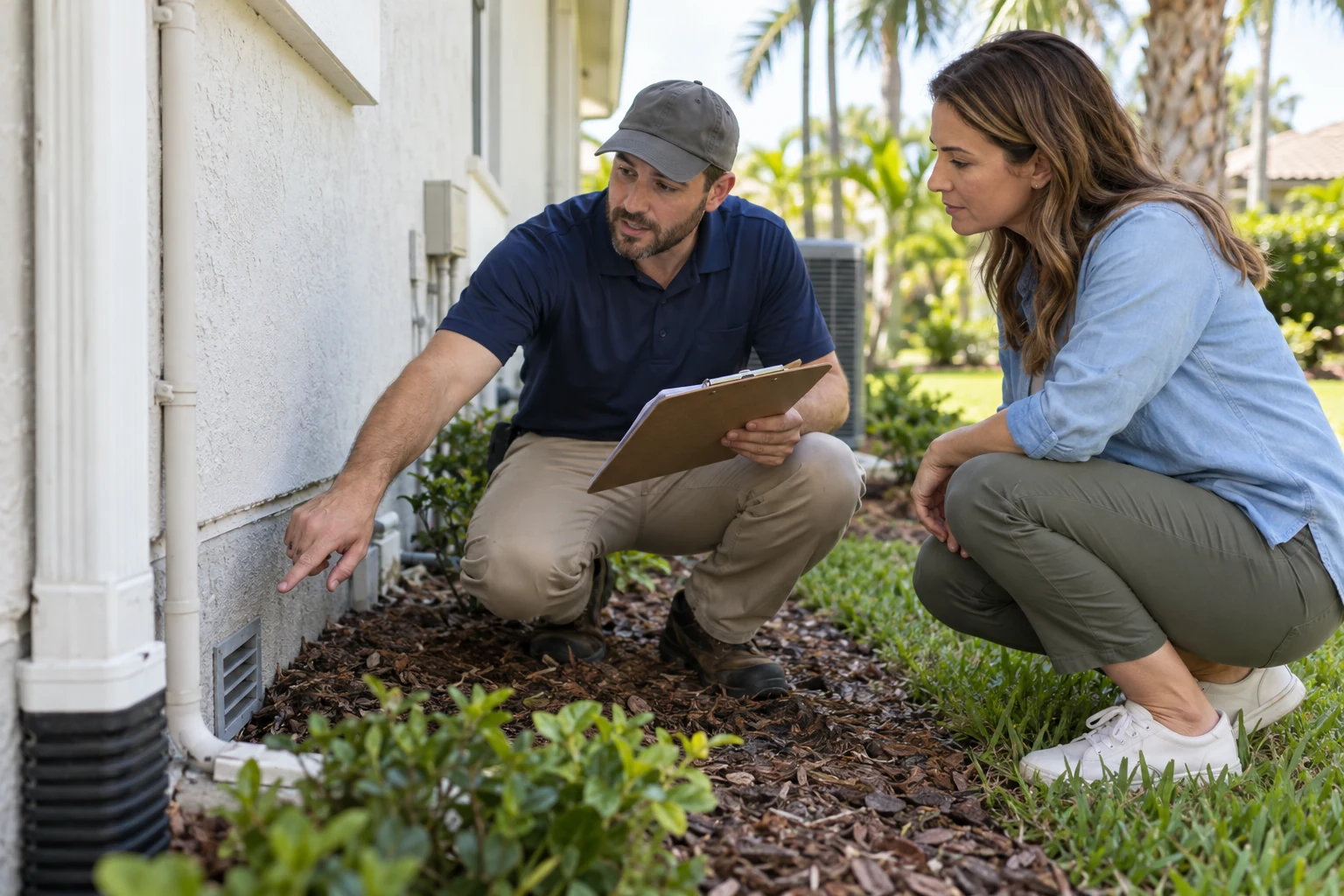
Quick answer: The strongest warning signs are fresh droppings, new gnawing, repeated night sounds, nesting material, grease marks, and a persistent animal odor. One sign can have another cause, so connect the evidence to location, timing, and a possible entry route before choosing a treatment.
What are the first signs of rodents?
The first signs are often small and easy to miss. Look for dark droppings near food storage, under a sink, behind an appliance, in a garage corner, or along a wall. Fresh droppings are usually darker and softer than old, dry material. A few pieces do not tell you how large the problem is, but they show that something has used that area recently.
Listen for activity when the house is quiet. Scratching, light running, gnawing, or movement above a ceiling can point to an attic, wall void, or roofline route. West Palm Beach homes can also have sounds from palm fronds, air-conditioning cycles, birds, and expanding roof materials, so sound should be documented with time and location rather than treated as proof by itself.
- Droppings along a wall, cabinet, or stored-item edge
- Food packaging with small holes or tooth marks
- A stale, musky, or ammonia-like odor in a closed area
- Repeated nighttime movement in the same part of the home
How to read droppings and odor
Droppings are useful because they show where an animal has traveled, but they should not be handled casually. Note the room, approximate number, age, and whether the material is near food, insulation, or an air return. Photograph the area from a safe distance and keep children and pets away until the source and cleanup plan are clear.
Odor can travel farther than the animal. Warm attic air, wall cavities, crawl spaces, and humid storage areas can move odor into living rooms or bedrooms. A smell that appears after rain or during air-conditioning use may indicate airflow from a hidden space. Odor alone cannot identify a rat, mouse, or other animal, so pair it with physical evidence.
- Do not sweep or vacuum dry droppings
- Do not open a wall or attic area just to search without a safe plan
- Record when the odor is strongest and whether weather changes it
- Arrange professional sanitation when contamination is widespread
What does rodent damage look like?
Gnawing is common around food packages, wood edges, plastic containers, wiring covers, screens, and soft building materials. Fresh damage may have sharp edges and pale exposed material. Older damage can be dusty, darkened, or mixed with nesting fibers. Keep the damaged item in place for a photo when it is safe; moving everything can erase the route clues that make an inspection useful.
A damaged screen or small opening does not always mark the actual entry point. Rodents may travel along a roofline, through a garage transition, behind a soffit, or around a utility penetration before reaching an interior space. A durable plan follows the full path instead of sealing the most visible hole without checking whether an animal is still inside.
- Chewed wires or insulation
- Torn screens, loose door sweeps, or gaps around pipes
- Nesting material made from paper, fabric, or insulation
- Grease marks or rub marks along a repeated travel edge

Where West Palm Beach homes commonly show evidence
The setting changes the inspection. A condo or townhome may have shared walls, roof penetrations, garages, or service chases that carry sound and odor. A bungalow or older single-family home may have crawl-space vents, porch screens, roofline gaps, or aging trim. A planned or gated community may have attached storage, landscaping, and common-area edges that affect where a route begins.
Heat, rain, landscaping, and frequent air-conditioning use can make sheltered spaces attractive. This does not mean every home with a palm tree or a garage has a rodent problem. It means the inspection should consider the building edge, drainage and moisture, roofline, screens, food storage, and the way people use the property every day.
- Attics and roofline transitions
- Garages, patios, and screened rooms
- Crawl spaces, foundation vents, and utility penetrations
- Kitchens, pantries, laundry rooms, and storage closets
When should you schedule a rodent inspection?
Schedule an inspection when signs repeat, appear in more than one room, or continue after basic housekeeping changes. An inspection is also sensible after you find chewed wiring, damaged insulation, strong odor, or activity near an attic, crawl space, or air-handling area. Early inspection can clarify whether the issue is active, old, isolated, or connected to a building opening.
A useful inspection should explain what was seen, where evidence was found, what route is most likely, and what remains uncertain. Ask whether the recommendation covers inspection, removal or trapping, exclusion, cleanup, repair, and follow-up. Those are related but separate steps, and a clear scope makes it easier to compare options without guessing.
- Signs are fresh or increasing
- You hear activity above occupied rooms
- You find damage near wires, insulation, or food
- You want a route-based plan instead of a quick spot treatment
What should you do before professional help arrives?
Make the area easier to understand without disturbing it. Write down the first date you noticed a sign, the rooms involved, the time of day, recent weather, and any changes in food storage or construction. Move pet food and dry goods into sealed containers, close interior doors when practical, and keep children and pets away from droppings, nests, and damaged wiring.
Avoid using poison, moving traps, opening walls, or sealing every gap before the route is understood. An animal that is trapped inside can create a new problem, while a rushed repair can hide the entry point. If there is exposed electrical damage, a strong gas smell, or an immediate safety concern, use the appropriate emergency or utility service first.
- Photograph evidence from a safe standing position
- Keep a simple room-by-room evidence log
- Remove accessible food and water sources
- Do not disturb contaminated material
How do removal, exclusion, and cleanup fit together?
Removal addresses the animal that is present. Exclusion addresses the building condition that allowed access. Cleanup addresses droppings, nesting material, odor, and affected surfaces. Repair may be needed for damaged screens, soffits, insulation, trim, or wiring. Treating only one part can produce a short-term improvement while the route remains open.
A practical West Palm Beach rodent-control plan should match the evidence and the property. Some homes need a focused inspection and route closure. Others need trapping, attic or crawl-space work, sanitation, or repairs before prevention can hold. Ask the provider to explain the order of work, what is included, and what follow-up will confirm that the route is closed.
- Inspection connects signs to a route
- Removal or trapping addresses active animals
- Exclusion closes the building edge
- Cleanup and repair restore the affected space
A simple weekly prevention routine
Prevention is easier when it becomes a short maintenance habit. Walk the garage, screened areas, roofline, and utility transitions once a week or after major rain. Look for fresh damage, displaced screens, food left outside, new vegetation contact, and gaps created by repairs or equipment work. Keep notes so a small change does not become an unexplained pattern.
For property owners in West Palm Beach, prevention should also account for seasonal storms, humid storage areas, and the way outdoor kitchens, trash, bird seed, and pet food are managed. The goal is not to create a perfect building. It is to reduce easy access, notice new evidence early, and respond with the right service before damage grows.
- Seal food and pet supplies
- Keep storage off the floor when possible
- Trim vegetation away from roof and wall edges
- Recheck screens, door sweeps, vents, and utility openings
What to include when requesting help
When you contact a West Palm Beach service provider about rodent signs West Palm Beach, share the address area, the rooms involved, the first date you noticed a sign, and what changed before the problem started. Explain whether the property is a single-family home, condo, townhome, rental, garage, or another setting. Clear details help the provider plan access and ask better questions before the visit.
Include recent weather, roof or screen work, plumbing or HVAC service, pets, children, stored food, and any safety concern. Say what you have already tried and whether the evidence returned. Ask for a written scope that separates inspection, removal or trapping, exclusion, cleanup, repair, monitoring, and follow-up. This makes the next step easier to understand and helps prevent a generic recommendation.
- Room, date, time, and type of evidence
- Recent storms, repairs, or changes in access
- People, pets, food, and occupied areas that need protection
- What the first visit includes and how completion will be checked
Local planning notes for West Palm Beach homeowners
A useful way to think about rodent signs is to build a small timeline. Write down the first room where you noticed a clue, the date it appeared, and whether the clue changed after rain, a repair, food storage, or a change in household activity. Then note whether the evidence is on the floor, near a wall, above a ceiling, or around an exterior transition. This turns a stressful discovery into information a provider can use.
When you contact a West Palm Beach rodent-control team, describe what you know without overstating what you do not know. Say that you heard movement, found droppings, or saw damage rather than naming a rat or mouse before inspection. Ask what the first visit covers, what you should prepare, and whether removal, exclusion, cleanup, repair, and follow-up are separate parts of the recommendation.
The best long-term result is not simply a quiet room for one night. It is a property where the route is understood, the animal is handled safely, food and occupied areas are protected, and the building edge is maintained. Clear evidence, plain communication, and a realistic follow-up plan are more useful than a rushed promise based on one sign.
Frequently asked questions
What is the most reliable sign of a rodent problem?
Fresh droppings combined with repeated activity or new damage are strong signs. Location, timing, and an inspection provide better evidence than any single clue.
Can I clean rodent droppings myself?
Small, isolated areas may have a different plan from attic, crawl-space, or widespread contamination. Avoid dry sweeping or vacuuming and get guidance when the area is extensive or hard to isolate.
How quickly should I call a rodent-control company?
Call when signs repeat, increase, involve wiring or insulation, or continue after food and access changes. Early route planning can prevent a larger cleanup.
Does one dropping mean I have an infestation?
One dropping does not show the size or age of a problem. It does justify checking nearby edges, food storage, and hidden spaces for additional evidence.