Storm-Season Rodent Prevention for West Palm Beach Homes
Wind, rain, debris, and temporary openings can turn a small building weakness into a sheltered rodent route. Use this before-and-after storm checklist to reduce access and spot new signs early.
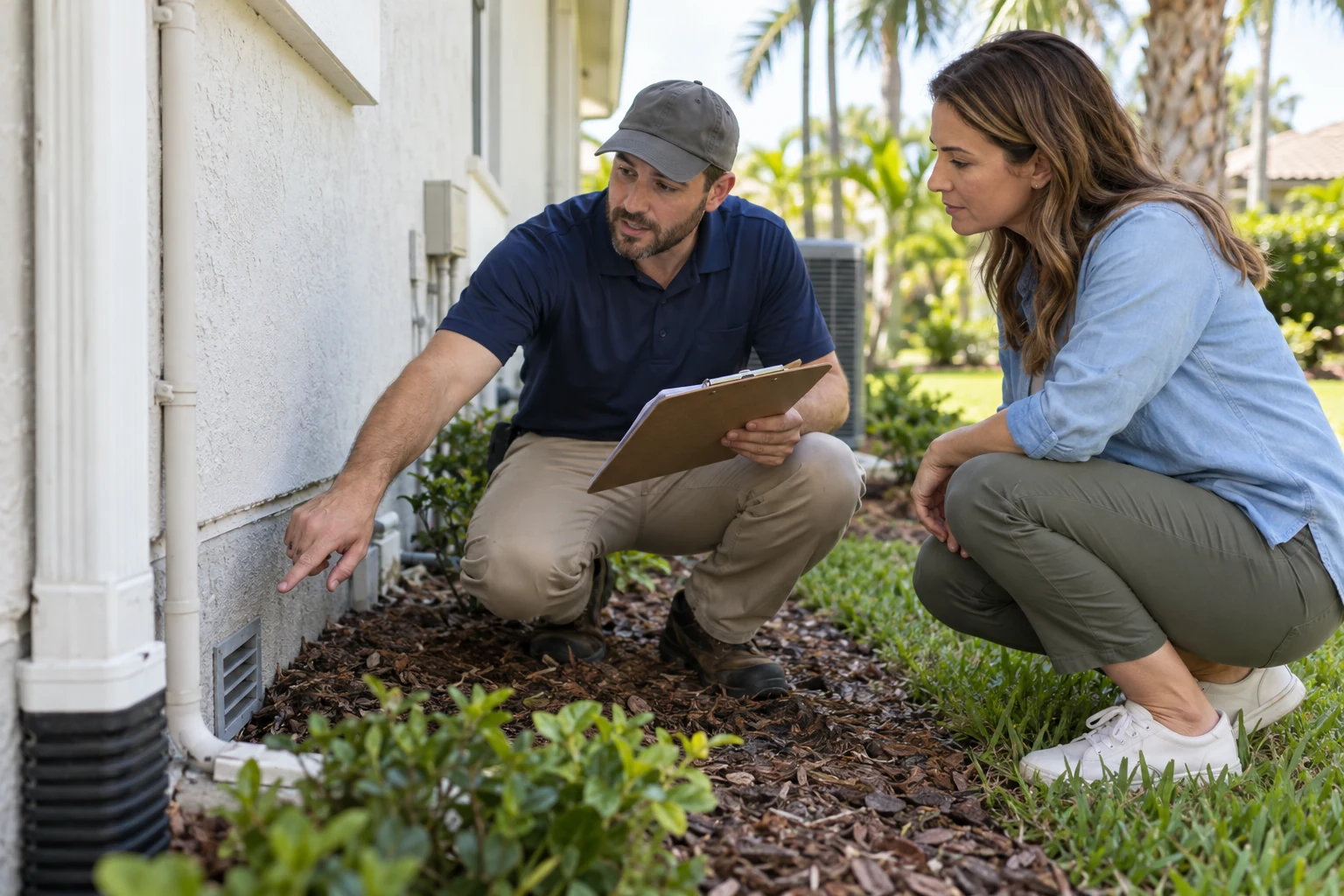
Quick answer: Before a storm, secure food, trim roof-contacting vegetation, and check doors, screens, vents, and visible roofline transitions. After conditions are safe, look for displaced screens, lifted trim, standing water, and new evidence before a temporary opening becomes a permanent route.
Why can storms change rodent access?
Wind can move screens, soffit materials, trim, and branches. Heavy rain can expose a gap, flood a low space, or push animals toward a dry garage, attic, wall cavity, or crawl space. Storm cleanup can also leave doors open, stored items outside, or temporary repairs that create a new transition.
A storm does not create every rodent problem, but it can make an existing weakness easier to use. The useful response is to compare the building edge before and after weather, then document what changed. Avoid climbing or inspecting during unsafe conditions.
- Loose screens or trim
- Branches touching rooflines
- Open garages or damaged door sweeps
- New water or debris near a foundation
What should you check before a storm?
Walk the property from the ground. Check garage door sweeps, side doors, screens, porch corners, visible soffits, roofline vents, and utility penetrations. Remove loose debris and keep branches from contacting roofs or walls when it is safe to do so. Do not block drainage or ventilation while preparing.
Secure food and attractants. Place pet food, bird seed, trash, and outdoor cooking supplies in closed containers. Move cardboard and soft nesting material away from garages, porches, and walls. These simple steps reduce the reward for an animal that finds temporary shelter after weather.
- Check door seals and garage edges
- Secure food, seed, and trash
- Trim safe-to-reach branches
- Photograph existing damage before the storm
How should you protect garages and storage?
Garages often connect indoor space with the exterior and contain food, boxes, tools, and gaps around doors or equipment. Keep stored items off the floor when possible and leave a small inspection gap around walls. Use sealed containers for pet food, seed, and household supplies that could attract animals.
Do not stack storm supplies so tightly that you cannot see the wall edge or door sweep. After a storm, clear debris carefully and look for new droppings, gnawing, nesting, or a damaged seal. If wiring or electrical equipment is damaged, stop and use the appropriate professional service.
- Keep boxes organized and visible
- Leave access around the wall edge
- Seal food and attractants
- Inspect after debris is safely removed
What should you recheck after wind and rain?
When conditions are safe, inspect screens, soffits, trim, roofline edges visible from the ground, garage seals, foundation vents, and doors. Look for new daylight, lifted material, torn mesh, standing water, fresh tracks, or animal damage. Take photos and note the date rather than making a rushed repair in unsafe conditions.
If the same area was repaired before, compare the old and new condition. A repair that moved again may need a different material, a structural repair, or coordination with a roofing, screen, or carpentry professional. Rodent exclusion should close the route without creating a water or ventilation problem.
- Check only from a safe position
- Photograph displaced materials
- Compare with previous repairs
- Arrange the right trade for structural damage
When should you call after a storm?
Call when new rodent signs appear, an entry opening is visible, an animal is heard in an occupied space, or damage involves insulation, wiring, or a confined area. Early inspection can determine whether the opening is active and whether removal, trapping, exclusion, cleanup, or repair should happen first.
Tell the provider what the storm changed, when the first sign appeared, and whether the area was repaired temporarily. This context can make the visit more focused. Do not seal an opening if an animal may be inside unless the route and next step are understood.
- New signs appear after weather
- A screen or roofline opening is visible
- An animal is heard indoors
- The area involves wiring, insulation, or a confined space
How do storms affect crawl spaces and attics?
Attics can receive heat, roofline openings, and displaced vent screens. Crawl spaces can receive water, damp soil, or changes in airflow. Both areas may be difficult to access and may contain wiring, insulation, or contamination. Use ground-level clues and avoid entering a space that is wet, unstable, or poorly ventilated.
Odor and sound can change after rain without proving that a rodent entered. Note the timing, rooms affected, moisture, and physical evidence. A route-based inspection can separate storm noise, moisture, wildlife, and active rodent activity.
- Watch attic and crawl-space odors
- Note changes after HVAC runs
- Do not enter wet or unsafe spaces
- Record moisture and evidence together
What prevention work should be routine?
Storm preparation works best when it is part of regular maintenance. Recheck door sweeps, screens, vents, roofline transitions, utility openings, and vegetation several times a year. Keep food storage consistent and leave inspection access around walls, garages, and storage areas.
Use a short checklist that fits your property. A condo, townhouse, bungalow, and larger home will not have the same route. The goal is to notice a failed transition early, protect the building from repeat access, and call for the right repair before signs spread.
- Seasonally check the building edge
- Maintain screens and door seals
- Keep rooflines clear of contact vegetation
- Record repairs and follow-up
How can a West Palm Beach homeowner plan for follow-up?
Keep photos, estimates, repair notes, and dates together. If activity returns, the history helps show whether it is the same route, a new opening, or a different source. Ask the provider how the completed work will be checked after weather and what signs should trigger another visit.
Prevention is not a promise that wildlife can never reach a property. It is a repeatable way to reduce easy access, protect food and occupied areas, and respond early when a building condition changes. That approach is especially useful in a warm, storm-prone climate where exterior materials are exposed year-round.
- Keep a weather and repair log
- Know who handles roof, screen, or electrical work
- Monitor after major storms
- Call when signs repeat
What to include when requesting help
When you contact a West Palm Beach service provider about storm-season rodent prevention, share the address area, the rooms involved, the first date you noticed a sign, and what changed before the problem started. Explain whether the property is a single-family home, condo, townhome, rental, garage, or another setting. Clear details help the provider plan access and ask better questions before the visit.
Include recent weather, roof or screen work, plumbing or HVAC service, pets, children, stored food, and any safety concern. Say what you have already tried and whether the evidence returned. Ask for a written scope that separates inspection, removal or trapping, exclusion, cleanup, repair, monitoring, and follow-up. This makes the next step easier to understand and helps prevent a generic recommendation.
- Room, date, time, and type of evidence
- Recent storms, repairs, or changes in access
- People, pets, food, and occupied areas that need protection
- What the first visit includes and how completion will be checked
Local planning notes for West Palm Beach homeowners
Storm preparation is most effective before the forecast becomes urgent. Use a short checklist that matches the property: garage seals, screens, soffits, roofline transitions, foundation vents, utility openings, food storage, and vegetation. Photograph existing conditions when safe. This gives you a baseline and can make it easier to identify a new opening after wind or rain.
After a storm, safety comes first. Do not climb a wet roof, enter a flooded or unstable crawl space, or touch damaged electrical equipment. Use a ground-level inspection and arrange the appropriate qualified trade for structural, electrical, roofing, or screen damage. Rodent-control work should then address the active route and the building condition that allowed access.
A repeatable maintenance habit is more valuable than a one-time seasonal promise. Check the building edge after major weather, keep stored food secure, trim contact vegetation, and follow up on temporary repairs. If signs return, record the location and timing and contact a provider before the route becomes established in an attic, wall, garage, or crawl space.
Frequently asked questions
Can storms cause a rodent infestation?
Storms can expose or worsen an entry route and push animals toward shelter. They do not prove an infestation, so inspect the building edge and look for physical evidence.
What should I check first after a storm?
When safe, check garage seals, screens, doors, visible soffits, roofline transitions, foundation vents, and new debris or openings.
Should I seal a storm-damaged hole immediately?
Only after confirming an animal is not inside and the repair will not block drainage or ventilation. Temporary work should be followed by a durable plan.
How often should I inspect for rodent entry points?
Use a seasonal routine and recheck after major weather, roof work, screen repairs, landscaping, or construction near the building edge.
Connect the evidence to the right service