How to Handle Rodent Droppings Before Professional Cleanup
The safest first move is to reduce disturbance. Protect people and pets, preserve evidence, and let the cleanup plan follow source control rather than spreading dry material through the home.
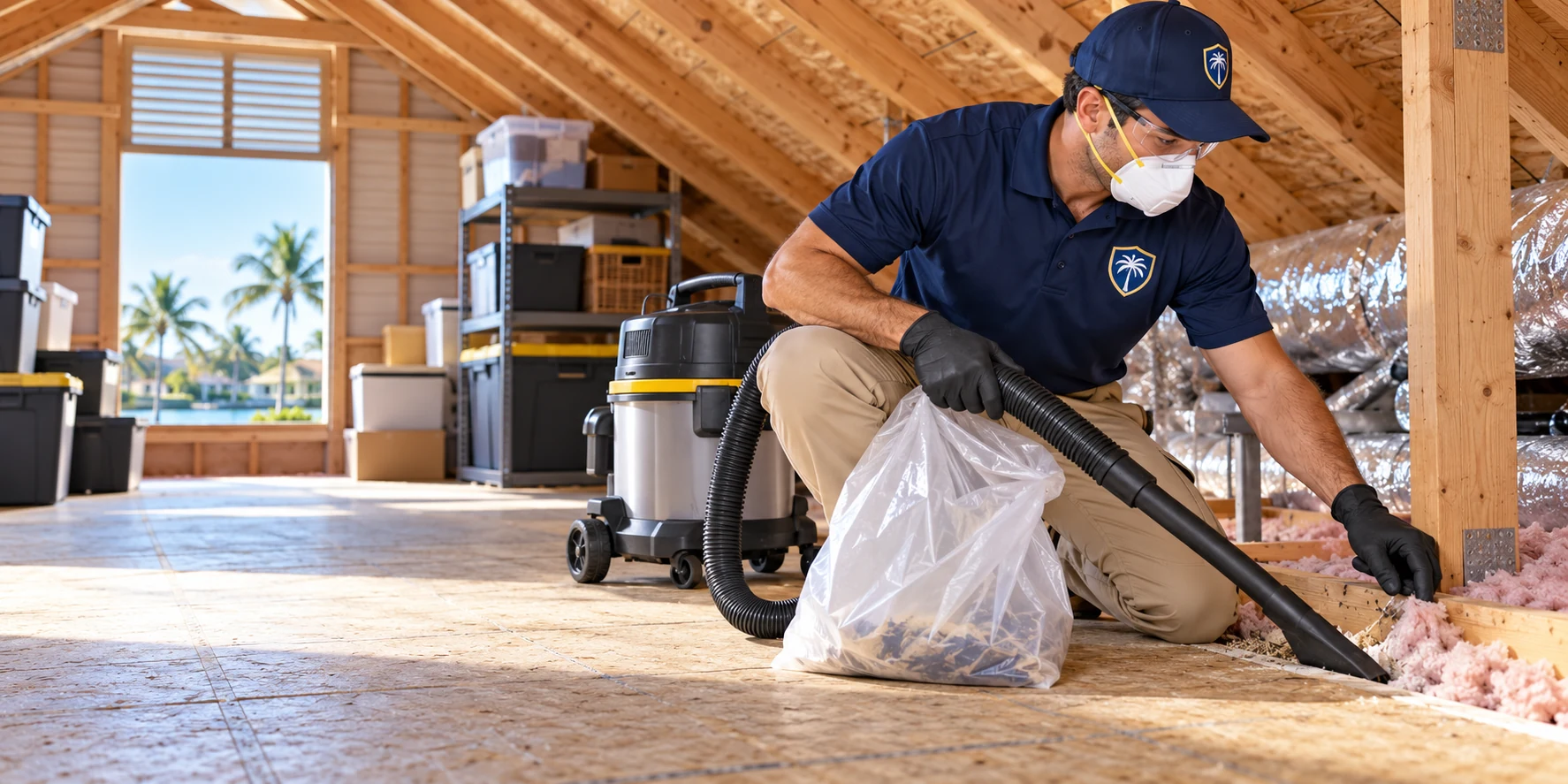
Quick answer: Keep children and pets away, isolate the area, avoid dry sweeping or vacuuming, protect food, and photograph the evidence. Larger attic, crawl-space, wall-void, or widespread contamination should be assessed by a qualified cleanup provider.
What should you do first after finding droppings?
Stop activity around the area and keep children, pets, and food away. Close an interior door when practical and avoid carrying boxes, clothing, or loose items through the affected space. Photograph the location before moving anything so the inspection can see the pattern and possible route.
Do not panic or spread the material while trying to clean quickly. A small isolated finding and a large attic or crawl-space contamination are different situations. The safe response depends on the amount, location, airflow, surface, and whether active animals are still using the area.
- Keep people and pets out
- Close the area when possible
- Photograph before disturbing evidence
- Call for guidance when contamination is widespread
Why should you avoid dry sweeping or vacuuming?
Dry sweeping, brushing, shaking, or standard vacuuming can disturb dust and move particles into the air. It can also erase the evidence that shows where an animal traveled. For a small, isolated area, follow the guidance of the appropriate health or cleanup professional and use the protective method they recommend.
Do not run a fan across dry droppings or use an air mover to make the smell go away. Air movement can carry material into other rooms. Keep the area contained and explain whether the material is near a return, vent, bedroom, pantry, or occupied workspace.
- Do not sweep dry material
- Do not use a household vacuum
- Do not shake contaminated fabric
- Do not blow air across the area
How should you protect food and household items?
Discard food with damaged or contaminated packaging. Move unaffected food into clean, sealed containers without shaking or dragging items through the affected area. Clean the outside of containers according to the cleanup plan. Keep dishes, toys, bedding, and personal items away until the surface and airflow questions are addressed.
Pet food, bird seed, cardboard, and open trash can keep an active route going. Secure these items, but do not move a large pile through a contaminated space. If the area is an attic, crawl space, wall void, or air-handling location, ask for professional guidance before attempting a full cleanup.
- Discard damaged food packaging
- Use sealed containers for dry goods
- Keep children’s items away
- Secure pet food, bird seed, and trash
When should professional cleanup begin?
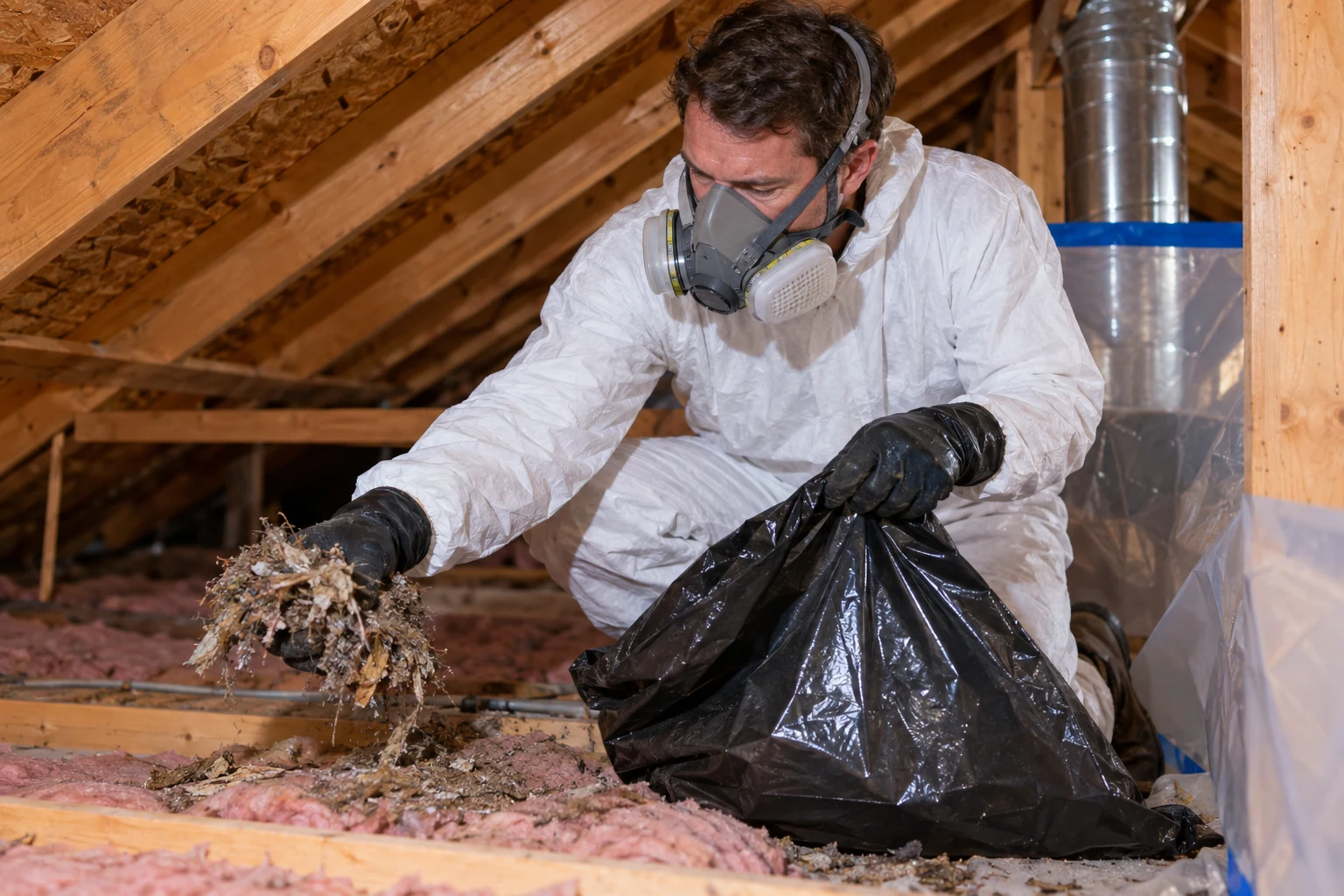
Professional cleanup is a strong choice for attics, crawl spaces, wall voids, air-handling areas, widespread droppings, strong odor, affected insulation, or a room that cannot be taken out of use. It is also appropriate when the route is active or the homeowner cannot safely isolate the material.
The cleanup provider should explain the work area, protective controls, disposal method, surfaces to be cleaned, and items that may need removal. Cleanup should not be described as a substitute for rodent control. If the route remains open, fresh contamination can appear after the first visit.
- The area is large or difficult to access
- Droppings are near HVAC or air returns
- Insulation or nesting material is affected
- New contamination appears after cleaning
What should complete sanitation cover?
A complete plan identifies affected material, protects clean areas, creates a clean-to-dirty boundary, removes waste safely, cleans suitable hard surfaces, and explains what happens to porous or damaged material. It should also address odor, drying, and how the area will be checked after work.
Ask whether sanitation includes insulation removal, surface repair, deodorizing, or only cleaning. These parts may require different equipment or trades. A written scope prevents a homeowner from assuming that a basic surface wipe includes every condition in an attic or crawl space.
- Identify affected materials
- Protect clean rooms and walkways
- Remove waste in sealed containers
- Document completed work and remaining issues
How do inspection and cleanup work together?
Inspection explains how the contamination happened and whether the route is still active. Cleanup removes or treats affected material. Exclusion closes the building edge. Repair restores damaged surfaces or materials. The order can change by property, but the plan should connect all four decisions.
If the area is cleaned before active access is addressed, the homeowner may see new droppings and believe the cleanup failed. If exclusion is done before an animal is out, it can create a hidden problem. Ask the provider to explain the sequence and what evidence will confirm the next step.
- Inspect the source and route
- Control active animals
- Clean affected areas
- Close access and repair damage
What West Palm Beach homeowners should know about humidity
Heat and humidity can affect drying, odor, and material condition. A damp crawl space or wet storage area may need moisture attention in addition to sanitation. Rain can also change the airflow or reveal a roofline route. Record recent weather and mention it during the visit.
Do not block foundation vents, cover a damp surface, or use strong fragrance to hide odor without understanding the building. Moisture, airflow, and contamination can overlap, and the right professional should explain which condition is inside the service scope.
- Note recent rain or leaks
- Watch for damp insulation or wood
- Do not block needed ventilation
- Separate odor control from moisture repair
How can you prevent another contamination event?
After cleanup, maintain the building edge and food storage. Check door sweeps, screens, vents, soffits, utility penetrations, and crawl-space access from a safe position. Keep food and pet supplies sealed, reduce clutter around walls, and call when signs return instead of repeatedly cleaning the same area.
Keep a record of the cleanup date, affected rooms, repairs, and follow-up. This makes it easier to see whether a new sign is in the same route or a different part of the property. Early information is safer and less expensive than waiting for widespread contamination.
- Maintain access repairs
- Keep food and supplies sealed
- Monitor for fresh signs
- Schedule follow-up when activity returns
What to include when requesting help
When you contact a West Palm Beach service provider about rodent dropping cleanup, share the address area, the rooms involved, the first date you noticed a sign, and what changed before the problem started. Explain whether the property is a single-family home, condo, townhome, rental, garage, or another setting. Clear details help the provider plan access and ask better questions before the visit.
Include recent weather, roof or screen work, plumbing or HVAC service, pets, children, stored food, and any safety concern. Say what you have already tried and whether the evidence returned. Ask for a written scope that separates inspection, removal or trapping, exclusion, cleanup, repair, monitoring, and follow-up. This makes the next step easier to understand and helps prevent a generic recommendation.
- Room, date, time, and type of evidence
- Recent storms, repairs, or changes in access
- People, pets, food, and occupied areas that need protection
- What the first visit includes and how completion will be checked
Local planning notes for West Palm Beach homeowners
Finding droppings can create an understandable urge to clean immediately. Slow down enough to protect the area and preserve evidence. The amount, location, airflow, surface, and presence of active animals all change the right plan. If the material is in an attic, crawl space, wall void, air-handling area, or widespread room, professional guidance is the safer starting point.
Tell the cleanup provider what was disturbed, what was moved, and whether anyone experienced symptoms or had contact with the area. Do not diagnose a health condition from a website. Use appropriate medical or public-health guidance when needed, and use emergency services for an urgent safety or utility problem. The site plan should stay focused on safe isolation and property cleanup.
After sanitation, prevention keeps the work from being temporary. Confirm the active route is closed, protect food and pet supplies, maintain screens and door seals, and monitor for new signs. Keep a written record of the affected rooms, materials removed, repairs made, and follow-up date so the next decision is based on evidence rather than memory.
Frequently asked questions
Can I vacuum rodent droppings?
Avoid dry sweeping or a household vacuum because disturbance can spread material and erase evidence. Get guidance based on the location and amount of contamination.
Should I throw away items near droppings?
Not every nearby item must be discarded. Isolate items, protect food, and follow a cleanup plan that considers the material and level of contamination.
Is attic rodent cleanup different from kitchen cleanup?
Yes. Attics and crawl spaces can contain insulation, limited footing, wiring, and more widespread contamination. They often require a professional assessment.
Does cleaning prevent new droppings?
No. Cleaning addresses contamination. Inspection, removal, and exclusion are needed to address an active route and reduce recurrence.
Connect the evidence to the right service